
You invested in classroom technology. Where is the Engagement?
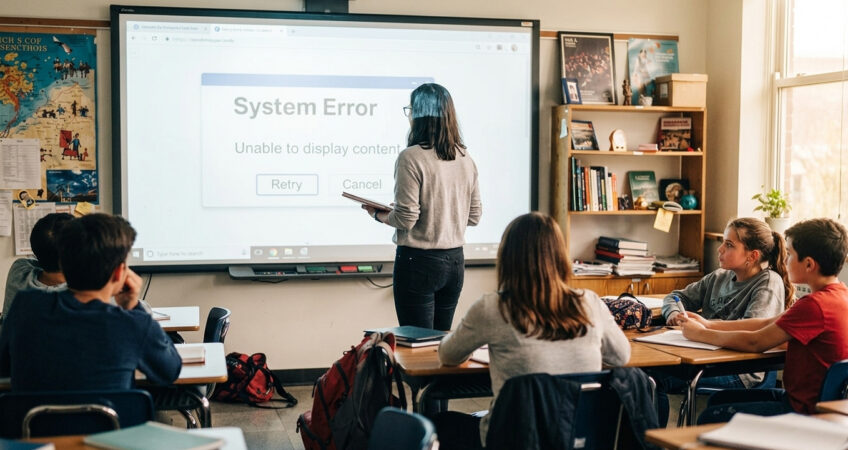
The teacher taps the screen to begin the interactive lab she has planned for her students, but the screen remains blank. As she proceeds to troubleshoot, the students lose focus.
Feeling frustrated, she abandons the digital lesson for the predictability of the projector and a stack of handouts.
Ultimately, the students end up sitting and watching with minimal participation.
Schools spend a lot of money on classroom technology in an effort to drive engagement. But too often, it doesn’t happen. And that can be disappointing.
Learning hasn’t become more interactive, which was the goal. In many cases, it has just become more expensive.
This isn’t a technology issue. It’s a system design issue. The goal is technology that actually changes what’s happening in the classroom. But solving this doesn’t necessarily come from adding more tools. It comes from stepping back and evaluating how your classrooms are actually functioning. What is working, what is not, and where the obstacles exist. It requires a system designed to support real teaching moments, where interaction is easy, immediate, and consistent across classrooms.
Identify What’s Not Working
It’s important to identify what is getting in the way of engagement. In many classrooms, the barriers aren’t obvious. Here are some ideas to consider:
-
- Startup friction – If a lesson takes more than a few seconds to begin, attention is already lost.
- Inconsistent experiences – When every classroom works differently, teachers default to what feels reliable.
- Limited training – Even good tools fall short without simple, repeatable workflows.
- Interruptions during instruction – Troubleshooting during a lesson breaks momentum and impacts participation.
These obstacles don’t show up on a spec sheet, but they provide the biggest impact on whether classroom technology actually supports learning. Engagement isn’t something you install. It’s something you design and train for. With the right approach, it becomes something you can actually see happening in your classrooms.
What Does Work
Classrooms that successfully use technology for engagement tend to share a few common characteristics:
-
- Immediate usability – Teachers can start a lesson without thinking about the technology
- Consistent design across classrooms – The experience is predictable no matter where they teach
- Interaction is built into the system – Not added as an extra step
- Support is accessible and clear – When something goes wrong, it should be easy to resolve quickly
These are not advanced features. They are, however, product and design decisions that remove friction and allow teachers to stay focused on instruction instead of equipment.
That’s where the right partner makes the difference.
Ready to see more engagement in your classrooms? Contact us today and let’s build a plan together.
